Blogging from the Bar

People are important. People are not important. They matter, and yet they don’t. As with everything else in this world, this is a situation of duality. Both ideas coexist at the same time. But truly, in the ultimate scheme of things, none of us individually really means a whole lot to the totality of our species. It may sound like a depressing thought, but the universe really doesn’t care. The caring part is up to us.

I spent an afternoon recently at the emergency room with my mother, watching – and sometimes even smelling – the folks who came, waited and then went. I saw a large young woman with a distant, disconnected look in her eyes – she appeared to be heavily medicated – and I watched as she was admitted into triage and then carefully walked back to her seat by a member of the ER staff. I smelled a homeless person before I saw her; the pungent scent reminded me of an old farmhouse, maybe a barnyard – and so my associations at first were pleasant – until a funk began to grow – the sweet smell of decay; the smell of a human unable to wash. (My mother’s words from just an hour earlier came to mind: “I took a whore’s bath” she had said when describing how she’d prepared herself to go out to the ER.) The stench quickly became too much for me, but I remained in my seat so as not to hurt her feelings by moving. I saw elderly folks, wearing masks as they waited. They arose from their seats in a feeble, cautionary manner. We all experience weakness and vulnerability, but it’s not a pleasant truth to face.

All of these plain, ordinary people had been in such a state of need, and yet the staff was so kind and tender when they received each one of these patients. I marveled over that. These were not beautiful people, they did not stand out as exceptional – in fact, had I seen any one of them on the street I might easily have passed them by without a second thought (or perhaps with a critical thought, if I’m being completely honest) and yet there in the emergency room they were all cared for and asked after with kindness and respect. It was very moving to watch.

I thought about the deaths of a few people just the day before, on a bridge in Baltimore that had collapsed. I remembered being surprised at the traction the story had had – and yet when I heard in first-person the stories of the families who had lost someone dear, it instantly became real. It’s so easy to disassociate from people because they’re removed from our own experience; do we really feel the pain of those who die in dire circumstances in far-away places on the globe? We may want to, but I don’t believe we truly can. Yet when it happens close to home, and right in front of our eyes, we begin to sympathize in a deeper way. The situation is made human, it becomes real. Of course all tragedy is real, but it doesn’t always feel to be. 

In the emergency room, there were numerous mini tragedies underway all the same moment. On the outside, these folks looked unassuming and unmemorable, and yet each was being treated like the precious human they truly were. It was heartwarming, it was reassuring. It was humbling.

I thought of Pompei in ancient times. The volcano erupting and swallowing thousands of people. When I was in high school, I saw a touring exhibit of plaster casts that had been made of actual inhabitants of the city during their final moments – in the poses they struck upon their deaths. Those frozen figures were both distant to me and yet very real all at the same time. When I hear of disasters on the news, I often flash back to the sight of those anguished individuals, and I realize we humans, no matter our place in history, cannot ever be protected from tragedy, pain and fear. And no matter how it befalls us, not a one of us is beyond the purview of death. At best, we can only hope for a peaceful transition.

Every human who has suffered or died was as real as you or me. Those who have experienced frightening demises may seem a world away, but their stories could easily be ours as well. This thought is never terribly far from my awareness. And that day, while waiting in the emergency room, it came close to home again.

________________________________________

For some reason my mother and I had a heated argument as she prepared for the drive to the hospital. Since then, we’ve spoken a few times on the phone and, as it comes easy to us, we’ve compartmentalized very successfully and were able to fall back into the “I love yous” before too long, and then things became normal again. 

But goddamit, may I not be as distrustful and defensive as my mother when I enter my elder years! I have taken to using the phrase “It’s not a hardship” when speaking to my mother about a situation in which a decision must be made, because for my mother everything is a hardship. Yet saying this aloud seems to make no difference – it does not reach her. “We can take your rollator in the car or not”, I will say, “We can take Braim Road or Locust Grove – nothing makes a difference to me – but if it does to you – just say something!” But that’s not how my mother operates. Passive-aggressive asides said under her breath are commonly used as a vehicle of primary communication. Not speaking up for her needs is her MO. It’s simply how she’s lived her whole life. Much as I’d wish that common sense and my honest declarations might make a difference, they do not. She makes simple non-issues into topics of debate. I have told her numerous times that I am a sixty-year-old woman, I have run a successful business and raised a brilliant child – what makes her think that I can’t make basic choices as we make our way out the door and on to our destination? I have never received an answer to that query.

When driving my mother home (I have known that driveway for over fifty years) she will still point to the driveway lest I miss the turn. Good lord. Really? This is the level of distrust and control with which my mother lives – at least with relationship to me. It is endlessly frustrating. I do know that she believes me to be a control freak – and in light of the deep and fundamental distrust she feels for me and my choices, I can understand how it affects her responses to me. But still. Really??

________________________________________

Days have now passed since my mother’s visit to the ER – one which ended up in an overnight stay and a surgery in which a stent was placed in her kidney – and she is back to her usual self. General anesthesia at her age always makes me a little concerned, but she and I appear to share a high tolerance for the stuff that knocks us out. There do not appear to be any lasting effects from the anesthesia. And that is good news.

This near-the-end chapter must feel a little strange for her, perhaps even a little scary, but it’s not something she reveals. I tried to investigate further the other night when we had dinner together, but she didn’t offer up any insights. (I had bought some lamb, string beans and potatoes for her, suggesting she make herself an Easter dinner. In that her prime creative expression in life has been that of being an exceptional cook, I was happy when she offered to make dinner for the two of us. And it was so delicious. When I arrived at her house and she was in the midst of preparing everything – in spite of her steeply bent-over spine and arthritic hands – I realized how lucky I was that my mother, at 89, was still making home-cooked meals like this. In spite of how crazy we make each other, when she finally does leave us, I will miss this time.)

Even though I am glad to have her here with us – and to still know the sense of home and permanence her presence provides – there is a part of me which almost wishes that the Band-Aid be ripped off already. I wrote a song called “House of Cards” in which I ponder this strange place of worry and not-knowing. Will things become dire? Will my mother fall, will she experience an event that changes everything in an instant? Will the entire remaining estate go to pay for her care until she dies? Will she die in a place other than her home? My one main goal is to ensure she does in fact die at home, but one can never truly be guaranteed of that outcome. I also worry about her being bored; her life is very small, very repetitive. It seems her whole day is simply about getting dressed, eating and then going to bed. In between she feeds and watches the deer outside her windows, and she enjoys a drink in the evening while watching the umpteenth episode of MASH or All in the Family. Can this be enough? It would likely drive me insane. But perhaps as one enters the truly aged years the need for stimulation and new experiences wanes. I can’t imagine being in a place like that, but then again, just ten years ago I couldn’t have imagined that my own body would age as it has, or that I would find myself wanting go home and be in bed by eleven.

______________________________________________________________

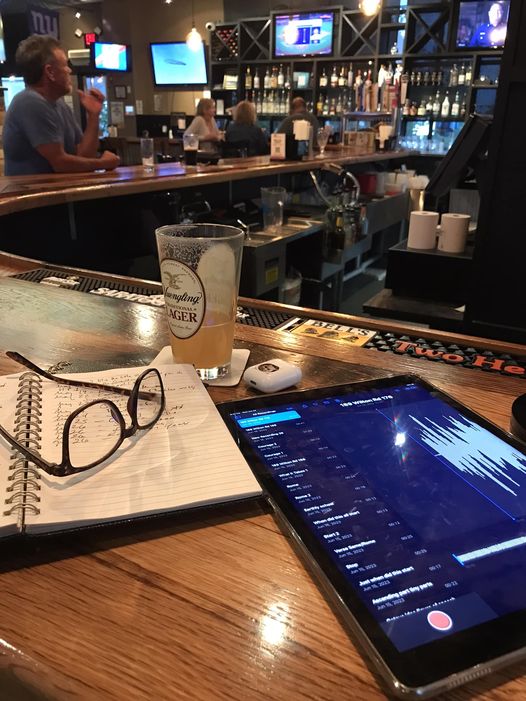
I began writing this at a local Irish pub as a means to learn how to use my new Bluetooth keyboard and iPad setup. I began writing with loud music playing, a beer at hand. It’s also where I’m concluding this piece. At a bar, with the energy of people all around, again with a beer at hand. I can’t imagine a life without this experience, and yet I’m fully aware that it’s made possible by relative youth, health and vigor, and a certain place of privilege in which I exist.

But no matter the level of privilege into which we are born, the primal losses unite us all. May I find it in me to navigate the coming unknown waters with compassion and patience. And even as the contours of my life change in those impending and profound ways, I intend to savor every moment of these earthly pleasures, knowing deep in my heart that it will not always be thus.

________________________________________

Post Script: My song “House of Cards” explores the worry of not knowing how life will play out. “Depression Era Girl” is a song about my mother; writing it helped me to organize the sorts of idiosyncrasies I mention in the post.

Before too long I will have an EP on all the platforms so that you may finally hear what I’ve been doing for the past year. I love songwriting, but it sure feels good to write for this format again and I hope not to let four months pass before posting my next piece. I deeply appreciate your still being here!

Chicago Tribune Commentary Elizabeth Conant: Lin Brehmer reminded me that it’s great to be alive – and a life well-lived is a triumph

Photo credit: E. Jason Wambsgans


The past few months have been hard on me and my peers. Our world is changing.

We’ve begun to lose iconic people who’ve always seemed to exist as permanent landmarks in our lives and culture, such as WXRT-FM 93.1 host Lin Brehmer. It’s easy to forget that these people are human and that they’re aging too.

I’m at the doorstep of 60, and in the past year or two, I’ve become acutely aware that this is an age at which maladies appear more frequently and morbid diagnoses begin to arrive. Even in my early and mid-50s, I retained that feeling of “everyone but me” regarding aging and disease — an attitude that prevails among the young and early middle-agers. It’s the sense that one has not arrived yet, that age and its concerns are still far off.

In our modern world, we are very keen on extending life, and we have come to expect longevity. It’s easy to forget that just a generation or two ago, if you made it to 60, that was an acceptable outcome. If you died in your 70s, it wasn’t considered a breach of cosmic justice. It was simply your time. Your glorious turn on the planet in corporeal form was up.

But these days, we fight as hard as we can to survive into years of frailty — and then we consider it a victory. I disagree.

I assert that a life well-lived is a victory, no matter what age it finds completion. It may be heart-wrenching to see someone depart, and it might not seem fair, but a life fully expressed is not a failure or a tragedy. Rather, it is a good outcome.

Last year, I went back to my hometown of Chicago for a visit. It was a thrilling week for me, densely packed with reunions. There was music and food, and there were all those streets and neighborhoods that I knew so well, the sight of which made me profoundly happy. WXRT provided the soundtrack.

The DJs’ voices on WXRT were as familiar and comforting to me as those of old friends. After all, these on-air personalities had been with me for years. It felt as if no time had passed since I’d moved away, more than a decade ago. Lin accompanied me as I drove through the city. I can’t hope to describe how full this made my heart. The sound of his voice made me feel loved; it restored my spirit. It made me feel like I really had returned home. I experienced a moment of true bliss that day.

Lin died on Sunday.

I knew he’d left the air in the summer, but I’d also heard that he had returned this past fall. Somehow, I just figured he’d beat the cancer, and he was back; all was as it should be. The news of his death was shocking to me. Understandable but still shocking. And as I began to think more critically about it, I realized that my generation was at the beginning of its downslope.

It’s begun. The time of goodbyes.

Death is nothing new, and our grief is not exceptional. But what does make the experience far different at this time in history is that we are all experiencing these losses in real time and on a global scale because of the internet. For us, there is no softening of the message through the buffer of time. Maybe it’s a good thing because it is certainly cathartic to be able to share with people all around the world our grief and our memories. I’d even say it’s a kind of privilege. But it’s certainly a new one.

For the most part, a death after 60 productive years on the planet is not a tragedy. It’s a sorrow that will subside as time passes. And as we in the 50-plus segment of the population can easily attest, time passes much more quickly as one ages.

Ten years ago feels like the year before last. Last year feels like just last week. Our end dates are fast approaching. But let us not be made too weary by this; all of us have done the best we can, and we will continue to enjoy the ride as best we’re able. Let’s thank our missing comrades for all they added to our lives, let’s smile at the memories and let’s let them go with a wave and a kiss.

Thank you, Lin, for reminding us that it really is great to be alive.

Elizabeth Conant is a musician and writer originally from Chicago and now living in Saratoga Springs, New York. She played keyboards for more than a decade in the Chicago-based indie pop band the Aluminum Group. She blogs at TheHillhouseinGreenfield.com.


This is a commentary published on January 24th, 2023, in the Chicago Tribune.

It is an edited version of the original post entitled “Liz’s Bin”.

Liz’s Bin

The past few months have been hard on me and my peers. Our world is changing.

We’ve begun to lose iconic individuals who’ve always seemed to exist as permanent landmarks in our lives and culture. It’s easy to forget that they’re human, and that they’re aging too. And since many were there to pave the way for us, they may even be a bit older than we are; it stands to reason they might leave first.

I’m at the doorstep of 60, and in the past year or two I’ve become acutely aware that this is an age at which maladies appear more frequently, and morbid diagnoses begin to arrive. Even in my early and mid-fifties I retained that feeling of “everyone but me” regarding aging and disease. The attitude which prevails among the young and early middle-agers. The sense that one has not arrived yet, that age and its concerns are still far-off. For me personally, the new awareness and perspective began as a murmuring in my 58th year and moved in for good sometime over the past twelve months.

I now take nothing for granted. Blood pressure meds are part of my daily ritual now, and due to a family history of colon cancer, I have pre-cancerous polyps snipped off every few years. I’m thankful all is well so far, but it’s real now. It’s here.

In our modern world we are very keen on extending life, and we have come to expect longevity. It’s easy to forget that just a generation or two ago, if you made it to 60, that was an acceptable outcome. If you died in your 70s, it wasn’t considered a breach of cosmic justice. It was simply your time. Your glorious turn on the planet in corporeal form was up. But these days, we fight as hard as we can to survive into years of frailty – and then we consider it a victory. I disagree.

I assert that a life well-lived is a victory, at no matter what age it finds completion. It may be heart wrenching to see someone depart, it might not seem fair, and it may hurt, but a life fully expressed is not a failure or a tragedy. Rather, it should be considered a good outcome. I’d like to think that if my life ended tomorrow, it would be seen as a minor success. I’ve been kind to people (however I fully admit to also being neglectful and selfish at times) and I’ve tried my very best to be loving and kind wherever I go. That’s about the best I can do.


Last year I went back to my hometown of Chicago for a visit. It was a thrilling week for me, densely packed with reunions. There was music and food, and there were all those streets and neighborhoods which I knew so well, the sight of which made me profoundly happy. Two radio stations provided the soundtrack; WDCB (which at my arrival was serendipitously playing a track by friend and jazz guitarist Dave Stryker, who I had also coincidentally just seen play the night before at Caffe Lena in my current hometown of Saratoga Springs, NY) and then – there was WXRT.

The DJ’s voices on WXRT were as familiar and comforting to me as old friends. Because they truly were old friends. These on-air personalities had been with me all throughout my musical growing up. And it was kind of remarkable that they were still on the air. It felt as if I hadn’t actually been gone for a decade and a half. Lin Brehmer accompanied me as I drove north on 294. I can’t hope to describe how full this made my heart. It restored my life energy; the sound of his voice made me feel loved and ready to keep going. It made me feel like I really had returned home. I experienced a moment of true bliss that day.

Lin died yesterday.

I knew he’d left the air last spring, but I’d also heard that he had returned this past fall. Somehow I’d just figured he’d won – he had beat the cancer, and he was back; all was as it should be. Yesterday, the news of his death was shocking to me. Understandable, but still… And as I began to think more critically about it, I realized that my generation was at the beginning of its downslope.


It’s begun. The time of goodbyes.

Death is nothing new, and our grief is not exceptional. But what does make the experience far different at this time in history is that we are all experiencing these losses in real time, and on a global scale. For us, there is no softening of the message through the buffer of time. Maybe it’s a good thing, because it is certainly cathartic to be able to share with people all around the world, in real time, our grief and our memories. I’d even say it’s a kind of privilege. But it’s certainly a new one.

I can recall so many times when my parents would hear about the death of a friend or colleague and express their regrets with a tired resignation. It was as if the time in between the death and receipt of the news served to dull the sting. I can’t really know; my parents were of that stoic generation that thought it bad form to express their true feelings. What I remember is the pause that would follow after my father would peruse the New York Times obituaries and read a name aloud. A beat of silence would follow, and then there would be the recollections, and finally my mother would say “Oh, that’s too bad”, and on they would go.

It feels as if I too am adopting my parents’ approach to the news of a death. It hurts, and yet it seems to hurt far less now than if these people would have died a decade or more earlier. At this point in the game my peers have all left legacies of some sort. There may be regrets – I should think every life has a few – but for the most part, a death after sixty productive years on the planet is not a travesty. It’s a sorrow that will subside as time passes. And as we of the fifty-plus segment of the population can easily attest, time passes much more quickly as one ages. Our pain will soon become less acute.

Ten years ago feels like the year before last. Last year feels like just last week. You know. It’s gone in a blink. Our end dates are fast-approaching. But let us not be made too weary by this; all of us have done the best we can, and we will continue to enjoy the ride as best we’re able. Let’s thank our missing comrades for all they added to our lives, let’s smile at the memories, and let’s let them go with a wave and a kiss.

Thank you, Lin, for reminding us that “It’s so fucking great to be alive”.


Postscript thoughts:

Men, please don’t put off having a prostate exam. My own father had prostate cancer, but thanks to early detection, he went on to live another two decades. I know that men aren’t as familiar with routine physical exams as women, so if you haven’t been to a doctor for a health check in a long time, please break this trend and make an appointment.

~~~

Funny that after all these years I never knew that Lin got his start in commercial radio here in upstate New York and was known as “the Reverend of Rock and Roll” at WQBK, in Albany. We traded home states, but in the reverse. (But like Lin, I will always be a Cubs fan.)

~~~

Here are a few songs played on WXRT today as Lin’s colleagues remembered his life through stories and music:

“Chicago” by Sufjan Stevens.

“No Hard Feelings” by the Avett Brothers.

“Keep Me In Your Heart” by Warren Zevon (it was his last song).

“All Things Must Pass” by George Harrison.

“I’ll Take You There” by Chicago’s own Mavis Staples.

~~~

Today’s Sun-Times piece on the life and death of Chicago’s WXRT radio host, Lin Brehmer.

~~~

The title of this post was inspired by Lin’s Bin.


The first track Lin played on his commercial radio debut at WQBX in Albany (January 20th, 1977) was the Beatles “Within You, Without You”. He explained that he had chosen it because he had always felt that “life flowed within you – but mostly without you”.

Horizon Bound

These days I think my job to be mainly that of a writer. An unpaid writer without benefit of professional editing, but a writer no less. A ruminator. A distiller of my many experiences into bite-sized takeaways that don’t require a lot of time invested to offer a return of insight.

But what exactly makes me qualified to offer such wisdom? A fuck ton of life experiences. I’ve packed a lot into my 59 years. And at the rate that people of a similar age are dying these days, I kinda feel the clock ticking. I feel a strong urge to share my shit. If the material isn’t of interest to you, that’s fine. But if you do resonate with my writing, then I can call this a job well done.

And, having long considered myself to be a “jack of all, master of none”, this is not a small achievement. (My son, were he to read this, would likely correct me; strangely, the original meaning of that phrase was just the opposite. But let’s not go down that rabbit hole for the moment.)

What is unresolved in my life? What would I like to see completed in a flat-out winning scenario? These are the questions I am posing to myself these days, with the sorrowful knowledge that much of it will likely not come to fruition. So I gotta make hay while the sun shines. (That expression leaves no room for misinterpretation.) I shall lower my expectations and find myself much happier at the results.

When I see middle-aged or older folks go through harrowing medical journeys in order to stay alive, I often wonder why? I’m honestly not sure I’d take any drastic measures to keep going at this point, should I become afflicted with a life-threatening disease. Or – perhaps my innate human drive for survival might kick in and supersede my current feelings on the matter. I just don’t know. But what I do know is that my son is launched. My most important job has been done. Were I to die in the near future, he might grieve my departure, but I can tell you it wouldn’t slow him down one bit. He’s sailing under full power now.

At this point in my life, I’m just trying to stay alive longer than my tenacious mother. After that, I dunno. I can honestly say that I am not entirely thrilled about being here. The things I’d always valued are increasingly elusive. I realize this may sound terribly aloof. Because, my goodness, don’t I have it all? I’m surrounded by nature, my home is beautiful (and paid for) and I’m safe. But my life is flat, flat, flat. Very little joy these days. As things stand now, there is no more playing music with other humans. No more in-person camaraderie, no more athletic success (much less prowess), and no more promise of aesthetic satisfaction regarding my aging body. And certainly, no more sex. Naw. That ship left the dock back in Milwaukee.

This next stage of the game is going to require a whole new approach. Every decade or so it seems life requires an overhaul, and now seems to be that time of reckoning. I’m not feeling quite up to it, but like a runner with her eye on the finish line, I’m motivated to find that second wind and blow this thing out to the best of my waning abilities.

Stay with me as I wrestle publicly with my grumbling alter ego. Let’s see if I can’t offer you a few more interesting tidbits before I reach my ambit.

See you next year, friends.

Ubiquitous Elephant

Woman ill in hospital bed

I can’t leave this unspoken anymore. There is an elephant in the room. There is an elephant in every room, and not a one of us is brave enough to admit it out loud lest we stir the pot, finding ourselves at the receiving end of a whole lot of grief.

Medical procedures and pharmaceuticals extend our lives far into the frailest years, and, more often than not, this creates a lousy situation. In short: people these days are living too long. A long life is not a victory if it is an unpleasant one. Consequently, I believe that every adult should have the right to choose a humane and legal death.


My mother is living on and on in the isolation of her house. Granted, she’s got the deer and the birds and the woods outside her windows, she’s got her British murder mysteries, and all of the 70s and 80s sitcom reruns to entertain her. She’s got The New Yorker to read (and read them through she does!), she’s got her drink every evening, and she’s still able to prepare food (she knocked out Thanksgiving dinner again this year, a true feat in that her right knee is now quite literally bone on bone). But she’s not able to come and go and she did only months ago. She is stuck inside her house. It can’t be easy. But there’s no reason to highlight this. She knows. And she has adapted. People are really good at that.

Now she is faced with a knee replacement at the age of 88. (She has postponed dealing with this for a long time. That’s understandable, but at this point there’s no avoiding it.) It surely stands that a woman of her determination will come through it ok, but if not, then what? And, even if things do go well – what then? We need to make some modifications to her house. She knows this, and we discuss some of the logistics with success. But when I move too fast, offering to do something for her, she gets angry, and says I’m taking over her life. And she has drawn the line at care. Somehow, this future scenario does not involve any outside party coming in to assist her with things. She fights me on this, saying I write her off as incapable. Quite the contrary; I know that she is clever and resourceful, capable of surprising things in light of her limitations, but she is human, after all – and post-op, she will need care, one way or another.

I believe that the thing she’s battling with is not so much the details themselves, or that I am taking over, but rather it’s the beast that is pushing its way into the room which frightens her. I wish we could just acknowledge the creature, and make plans accordingly. It might make the beast less menacing.


Mom and Elihu both know my feelings about death. I believe that in a fully realized and modern society, a lucid adult should be afforded a medically efficacious, humane and affordable – and legal – death at the time of their choosing. Both Elihu and my mother warn that I might not avail myself of such a service when I become old and frail. They posit that when I am a very old woman, I might not wish for the end. Yes! I completely agree! How can I know possibly know how I’d feel in that moment? I can’t. But what I do know is that I want the option of a humane – and legal – exit.

I’m gonna stop you right now if you’re tempted to spout the reactionary “It’s a slippery slope” response. While the more litigious or philosophical among you may have specific points to support your case, I believe that for the majority of people, that response is born of fear. The religious among you will also take issue with this for your own reasons. This is where we will likely part ways; I do not believe a loving god would deny its children this most tender of mercies. I won’t be getting into the arguments here and now, but rest assured I’ve studied all manner of debates on the subject, a multitude of points and counterpoints.

I’ve been thinking about death for years. I’ve seen many videos of people’s final moments (a profoundly generous gift on the part of both the people themselves and their families). I’ve read many books, and listened to numerous talks on the subject. What helps give me the courage of conviction to write candidly about this is the number of people with whom I’ve discussed the topic, and the number of people who have admitted to me, in the safety of a private conversation, that they heartily agree. People should be able to choose their exits.


As a musician I work a fair amount in nursing homes, and I see the saddest outcomes for individuals who’ve lived the most glorious lives. After I finish performing, I always make informal rounds, visiting folks who I see to be awake and who welcome my brief intrusion. I’ve been playing at one facility for nearly seven years, and, sadly, some of the residents are still there… They are bedbound, screamed at all day by TVs, blaring at top volume. It is cacophonous. It is inhumane. It is terrifying.

I can recall meeting a fellow who had taught chemistry at Columbia University; he spoke about his life as a child in a small town in Finland. He recalled the fish that his mother had made, and told me how much he missed that. He told me about the research of which he was a part, he told me of his three children whom he’d raised in the city, now all gone. Dead. He and his wife had long since divorced. Was she dead too? He didn’t know. He was well-spoken and brightly recalled his memories which I followed with great interest. And yet here he was, bedbound, soiling himself and unable to move, dependent upon an over-worked and underpaid aid to restore his comfort, to say nothing of the basic dignity he’d lost in the whole mess. Bells and blinking red lights were always going off in the hallways; it was impossible for the staff to keep up with the need.

(We have all visited a relative in one of these places. And if you find the higher end joints a little off-putting, just imagine this bottom-of-the-barrel venue. No one in his right mind would ever send his mother to such a place. It goes without saying no one would wish this outcome for themselves, either.)

After I have finished with my visits, I invariably end up speaking to the staff. At the conclusion of our conversations, I always pose the ultimate question: If you could choose to end your life in a safe and legal manner, thereby eliminating the need for living in such a place, would you? And of the dozens of people whom I’ve informally polled, not one has ever answered differently. Every single person has said that they would choose a humane, safe and legal death over life in such an institution.


My mother comes from a generation which was raised to live in hardship without complaint. (Use it up, wear it out, make it do, or do without.) This generation was encouraged to be self-sufficient and responsible; living in this manner is often a point of pride. It makes sense then that her needing or asking for help feels wrong. Perhaps like a tiny failure. Hard wiring is not easy to undo. So at the end of her eighth decade, it’s a bit late to expect that my mother will change her way of thinking. I get it. Additionally, a woman like her who’s done an expert job at hosting hundreds of people over the years might have a hard time letting go of that authority and yielding up the most basic tasks to another person. It might also be that accepting help means that true frailty is not far behind. And, however heartbreaking it may be to conceive, that really is the truth.

Yes, I can understand that it’s got to be frightening to be in her shoes. I think we’re all scared of finding ourselves at that place in our lives. And yet so few of us have the courage to admit our fears aloud. Most of us keep silent; we stifle our gripes and concerns. We suck it up. And I really wish we didn’t.

It’s my hope that people all across this earth can learn how to speak candidly and caringly about the end which awaits us all (as well as the feelings of uncertainty that precede our final days). My mother and many of her generation may find self-advocated death an abominable thing – and certainly my mother is likely not the type to avail herself of such a service were it even available – yet I still assert that a humane and swift death needs to be the legal right of every rational, healthy adult.

Would you have surgery without anesthesia? No, you would not. Would you have your dog suffer? No, you would not. You would use medical tools to minimize or eliminate suffering. If you’re a doctor, you will likely cite the “do no harm” bit of your professional oath to me in protest. Well, I believe that preventing someone from obtaining a wished-for, safe and legal death at the conclusion of a long life is doing harm. Quality over quantity. It’s simply one step beyond a DNR. But, as things stand in December of 2022 here in the US, it’s one hell of a big step.

The elephant will seem far less menacing when we can get her fed and comfortable. She may even turn out to be a welcomed guest. But we’ll never know until we can all agree that she’s sitting right here in the room with us.


Drawing by Jules Bradbury

To see further examples of the work of Jules Bradbury, find her on Instagram: @no_still_life

or visit her website: www.no-still-life.com

I Could Be Good for You

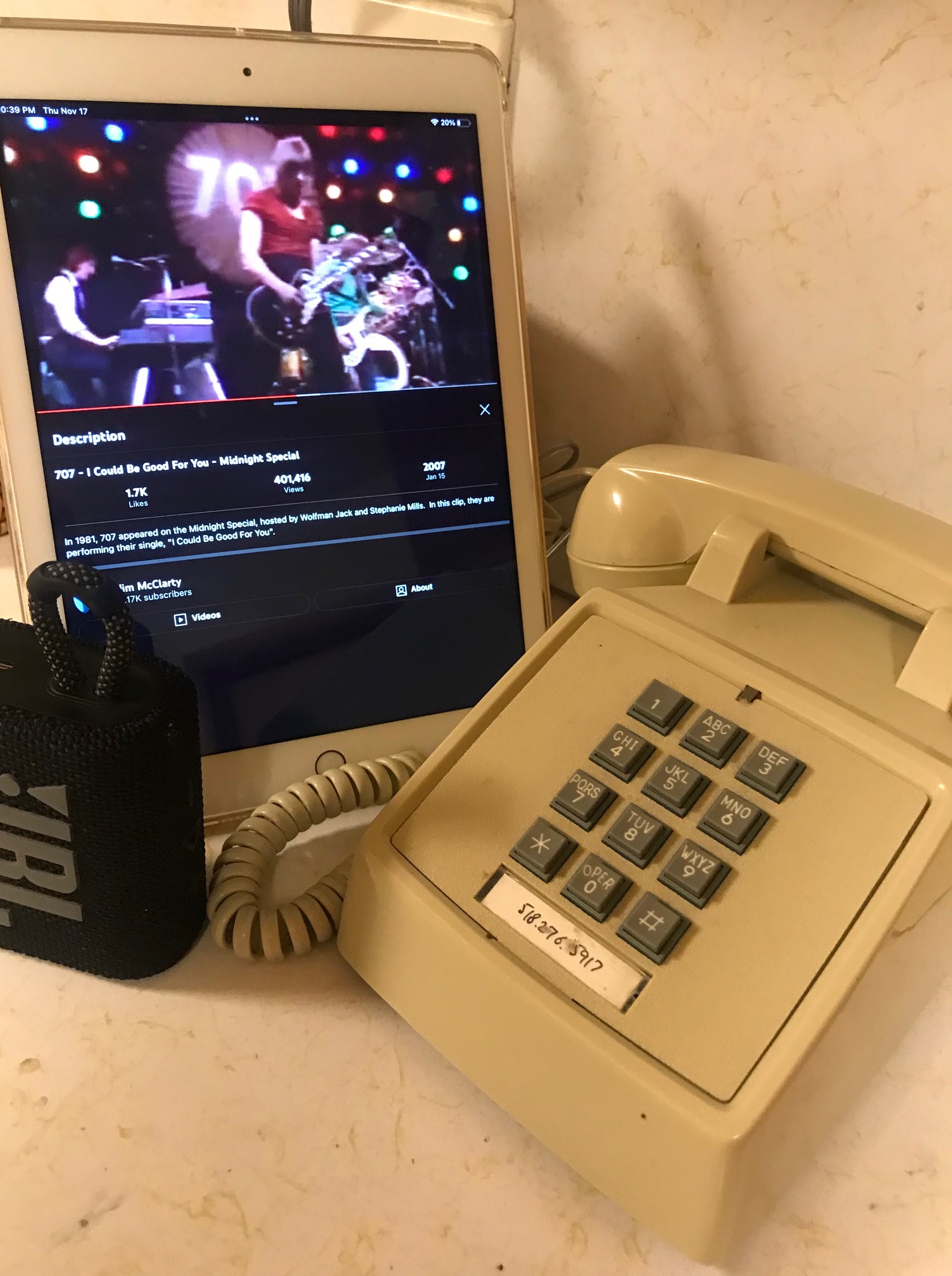
Watching a YouTube-guided playlist of era-specific videos while tending to the mindless task of scanning an unending pile of lead sheets for my new paperless life as a musician, I was brought back to some long-forgotten guilty pleasures, one of which being the band 707 playing their 1980 hit “I Could Be Good For You”. The live recording is rather primitive, but the performance is loaded with energy, and it positively thrills me.

Guitarist Kevin Russell, slumped over his low hanging Gibson, with his early rocker haircut and form-fitting T-shirt simply reeks of Nigel Tufnel from Spinal Tap. (In fact, the more I think on it, the more convinced I am that Christopher Guest may have modeled his character after him. Did Kevin Russell create his look or was he simply mirroring the collective archetype of the time? It’s a chicken-or-egg type of dilemma I suppose.) From the outside, this guitar player is a caricature, but from the inside, (to me) he represents the familiar.

These days, things familiar are dwindling. So seeing and hearing the band 707 as they were back in my youth brings me a mild sense of things being right again. It makes me feel the energy and hope of a kid. And who on earth does not thrill to the feeling that only naivete, inexperience and limitless possibility can bring?


While we make plans for the future and almost always have our eye on goals down the road, this doesn’t usually include the final stretch. That patch when it gets ugly and real. Seriously, who the hell ever truly thinks about getting old? Older, yes. But old? Consider this for a second.

I’m guessing being “old” is a vaguely defined time for you, a place in time far off into the future. You might be mindful about the process ahead, but I doubt you’re deeply aware. (Barring any unique or extreme situation, that is.) Me, I’ve yet to truly face the mirror. Yeah, I broke my neck once, but youth and good luck helped me to avert a life path which might’ve had me looking more closely at my mortality a whole lot sooner.

I’ll wager you haven’t put a lot of mental energy into visualizing how things will end. How things will really end. End end.

These days my mobility is limited. Really limited. And it sure does shed light on what the ending times might look like. The prospect of descending the five steps from my kitchen door to the ground outside is a challenge. Lightning bolts of pain are a possibility in every thoughtless move. A single step must be fortified with a cane’s solid contact with the floor and a tightening of core muscles. It’s exhausting. So is getting out of bed. The whole thing – just moving through a day and trying to maintain some faint semblance of time spent in contribution, not to mention performing the basic functions of living – is a huge effort and takes gobs of time.

Guilt blankets my spirits as I try to rationalize my diminished output. After a week of merely just existing, my ego is broken and looking for harbor. My inner voice sounds like a forgotten old woman muttering to herself: I’ve been a useful person, right? And I’ve been a musician, too. How lucky for that, right? But wait, was I any good? I think I was… I was good enough, I suppose… But what the hell was I doing all that for anyhow? It seems a bit vainglorious, truly it does. Well, at least I know that I’ve mostly been kind to people. I do know that. And I’m a really good teacher, yeah, I know that too. I do. And there’s also still a lot I’d like to write about – that’s of interest to some, but honestly, who cares? Wait, does any of this actually matter? Who needs another piano teacher or another blog post to read? Can I just be satisfied with my turn as it stands? Has my contribution been enough? Haven’t I had enough fun? Do I still have any reason to be here?

(Further musings go much deeper into the existential conversation; I’m still ambivalent about the “everything happens for a reason” philosophy, however pieces do tend to arrive in serendipitous ways, which tempts me to believe. But at the end of the day, whether we’re here for a reason or not, the ultimate takeaway for me is that we may as well do our best job at life while we’re here. Be kind, help when able, and do what we’re good at doing. Seems that’s the least we can do, and also the most we can do, too.)

I feel like Cinderella when I recall a reality of just six months earlier in which every one of my dreams had seemed to be coming true. A time in which I had a new keyboard, a new band and new prospects. Damn. I had it for a minute there. Right? Wait, did I? Well, I had a taste, at least. That’s more than most people ever experience. Dammit. I won’t be able to do any of this shit for much longer. Crap. Will I ever have it again?

Watching my 87-year-old mother moving around her house pushing a rollator and hanging onto the counters like a rock wall, I’ve harbored some sorry thoughts. God, how sad. How does life end up like this? And just what in hell is she even living for at this point? I like to think that I won’t end up thusly. But do not we all think this? Ha! We can all be sure, at least as things are now on this planet for most of us, we won’t have a choice in the matter. Some of us will draw the lucky straw and go either peacefully or quickly. The rest of us – the majority of us – will languish for a length of time in ill health and weakness, dependent upon others for basic tasks. This is a future none of us wishes for. But statistics show that it’s our likely outcome.

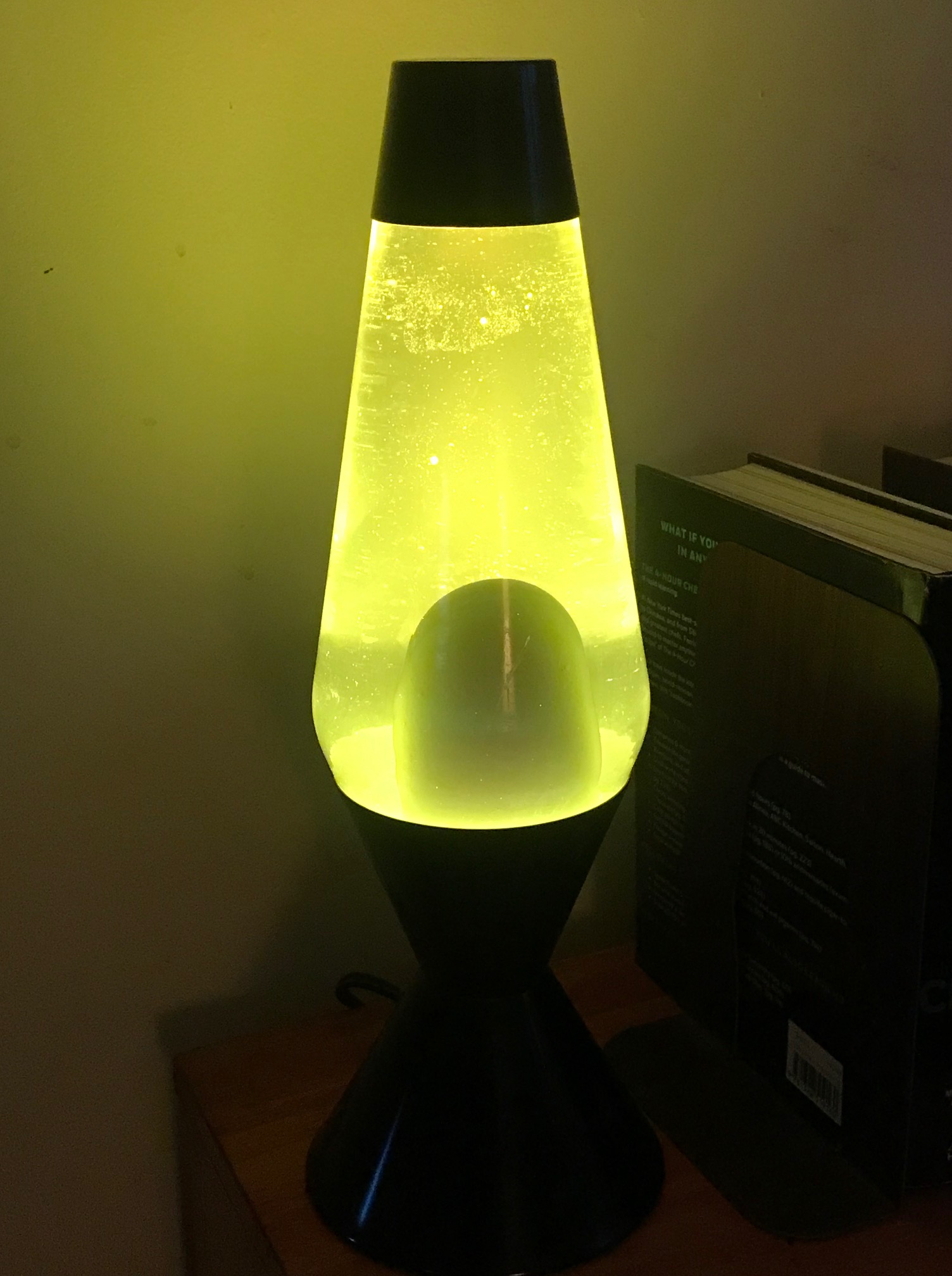
The lava lamp in my son’s bedroom has ceased to flow as it always did; the wax inside has grown stiff and slow-moving. Looking it up, I learn that yes, even lava lamps have a shelf life. I resist the temptation to see this as a metaphor for my own life and how it has slowed precariously over the past few months. This is not a sign from the universe, I remind myself. Get over it.


I begin a search on YouTube for back injury success stories. I’m gonna need some footholds on the way back up.

It appears I have a herniated disc (MRI next week will confirm). This new situation isn’t the usual back issue that’s bothered me since my twenties. This is acute, intensely painful and very different. While there’s been a slight improvement over the past few weeks thanks to several chiropractic sessions, I’m still unable to walk properly (let alone racewalk or dance, two things I dearly love). I certainly can’t workout – I can’t twist my core or lift a hand above my shoulder without experiencing a stunning electric shock of pain.

Perusing vids and websites, I’m encouraged by success stories. One young woman peppers her shpeel with the phrase “check your ego”. I really didn’t get her meaning for the first few minutes. And then, when I began to understand how long my road back to physical fitness was going to be, I got it. Sheeeit. I got it. Who cares if I was working out six days a week and could easily curl 20 pounds last May? None of that matters. I can’t do shit today, and I have to let all that “I used to” stuff go. No laurels to rest on. Crap.

My body is weak, soft, fat. And injured. But I just received my first round of exercises, so at least I’ve got a plan. Sadly, I’m beginning from a place way behind the usual starting line. That’s discouraging. It’s gonna be a long climb. This recovery will demand the kind of patience and perseverance I’m not keen on. The process won’t be sexy. But the alternative seals the deal on a lost future. So, onward I must go.

My mother faces a knee replacement in the next month, and this is the next family hurdle. I’m feeling slightly stressed that I cannot be of any significant help to her right now. She is in pain – I’m guessing it’s worse than mine – yet she doesn’t let on how horrible it is. But it shows; she looks weary. It’s all got me a bit emotionally guarded and on the ready for difficult times to come in the new year. My mother speaks cryptically about dying before she makes it to surgery, she laments the long wait time before the procedure (she needs relief now). She tells me how this is far more daunting a prospect than having her mastectomy this past summer. She’s a stoic woman and seldom allows her deep feelings to be known. But I can tell she’s afraid. Hell, I am too. My dear friend Ganga was seven years younger than mom when she died, shortly after her hip replacement. This stuff happens. We all know it, but aside from the very frank and helpful consult with the surgeon, no one else has spoken this fear aloud. It’s a strange time. A new and scary place.


My small and sedentary life of late has not been entirely wasted; I’ve written a number of songs. Most are toss-aways, some novelty numbers, a small number of earnest songs too, if not a bit too simplistic. Hey, I’m not a poet. At best I can write a jingle or a hook. So this is new territory. It’s taken a hard stop on my go-go-go life to bring me to writing music, so in some ways it hasn’t been a total loss.

A few weeks ago (before things got this acute) I saw the comedian Maria Bamford perform here in Saratoga. Her candid, stream of conscious style was stunning, mesmerizing. She is a genius. I am not, but I am definitely full of something that still seeks expression. Seeing her inspired me. She gave me a small dose of courage. She helped plant a tiny seed of a thought…

Characters, voices and bits come to me, and they quickly get recorded on my iPad memo app before they have a chance to vaporize in my flimsy memory. I don’t sleep a whole lot (getting in and out of bed positively sucks!) so I drag on into the wee hours of the morning, writing, inventing, improvising. I’m beginning to hatch a plan to weave all this into some sort of one-woman show. There are online busking platforms that might work as a venue. It’s only a germ of an idea at the moment, and until and unless it becomes public, only my son and a few friends will hear these primitive stabs at content. It’s a tiny light which helps to distract me from the sucky slog that is my life right now. All in its time, I suppose.

I may not have a lot to contribute at the moment, but I shall do my best to avoid wallowing. I’ll do something every day to pull myself up and out. I have my mom, my lost brother, beloved son and high school bestie to think of. I can’t leave them all quite yet. So for now, my life will consist of gentle core exercises, a handful of piano students, and writing new material. I’m a bit anxious about the next two months, so this seems like a productive way to focus my energy and take my mind off the worry. (My body doesn’t move fast, but my brain continues move with the pace of a nervous squirrel.)

Hopefully, by the close of this short chapter, I’ll be in a better place. Hopefully, by then I really can be good for you.

707 performing live on the Midnight Special. As a kid I would try – mostly in vain – to stay awake long enough to watch the show.

A short clip of Maria Bamford, with a clever piano accompaniment by Luke Thering.

The Birth of Death

Although I find the expression “passed away” a weak and distasteful euphemism for the term “died”, I admit that I myself have used it many times, when deep down I’d much rather have not. Hard to say whether I acquiesced for the comfort of my audience, or because on some level I’m a coward and lack the integrity to put my money where my mouth is.

This needs to stop.

I am so weary of the ways in which this current, first-world culture regards death. I am weary of the way in which we neglect the subject. I am weary of the trepidation with which most of us approach death. It drives me nuts. No, I take that back. It doesn’t just drive me nuts. You know what? It makes me angry. Seriously.

Here is the point at which I must express myself through a mild rant….

Do we not all understand how cemeteries pollute the air and waste people’s time with all that goddam lawn-mowing and weed-whacking? Do we not understand how embalming is horrible for the environment, and how it will not keep your loved one ‘as is’ unto eternity? And why do we just assume once a loved one is dead, that their body must be immediately whisked away from the premises, as if it was now a loathsome thing to be avoided?

You’d be surprised how many things around the experience of death are either taken for granted or are never even questioned in the first place.

Funny how you plan the shit out of everything in your life, yet when a family member dies, you’re all of a sudden thrust into the middle of an administrative vortex, making decisions with no prior information – and no bargaining power whatsoever. Death deserves as much planning as anything else. After all – this could well be one of the biggest ticket items of your life.

Depends on whether or not you’ve made some plans.

Once, while I was sick and confined to my bed for a few days, I set out on a little research project. I’d long had a list of unanswered questions which I could never justify carving out the time necessary to address. This was at the top of the list: Is it legal to be buried on your own property? There simply wasn’t enough online information at the time, so I found a couple of funeral directors and got them on the phone. I called different states, too. And I took notes. The consensus was “yes”.

When my boy was about eight years old, we’d had a conversation about death and where the bodies of dead people go. He’d accompanied me many times to the town cemetery on the hill, following along as I meandered through the headstones, matching up family members and imagining aloud the details of life back then. He’d understood that these were people just like the two of us, whose homes had been right here in Greenfield. He’d understood the concept of once-living people now lying in repose under the sod. And, as we’d seen a whole lot of dead animals at various levels of decomposition on the side of the road or even in our chicken run, none of this death talk was inherently unfamiliar to my son. In fact, I think it was precisely because he’d grown up like this – with a mom like me, and on a farm where creatures often die without warning – that he came to have his own feelings about death and what to do with a body once it was no longer living.

My young son told me that he himself wanted to be laid out in the woods. He told me that he should be put into a slight depression in the ground, and covered with leaf litter. I admired his thinking. We never wished to waste anything here; scraps always went to the chickens, paper and such went to the burn bin, and the resulting ashes were subsequently shoveled onto the garden or into the woods. (We called this method “going back to God”.) I told him how much I loved the idea, but that strangely, it was likely illegal. He protested adamantly, driven to the point of tears. He insisted it was the right way to put your body back into nature. He told me that it was the only way he wanted his body to end up. I calmed him by saying that I would do everything I could to make sure it would happen.

A dear friend of mine saw to his own burial in advance of his death. A craftsman and a farmer, he built his own casket and even dug the hole with his backhoe, right there on his property, not far from his house. In his mid-thirties he had been diagnosed with Leukemia, and after a couple of years it was clear that he wasn’t going to live much longer. While he still had enough physical strength left, he set about to make his final arrangements. My life at that time was in Chicago, and he was then living with his wife and three children in the hills of upstate New York, so sadly I wasn’t able to be there. I heard he hosted quite a party. And afterwards, he began his decline in earnest. Then he died, was put into the casket he had made for himself, and was buried in the grave he’d dug. His friends backfilled the hole. Can you imagine anything more perfect? Me, I cannot.

I hold this man’s ending as an impeccable model of closure.

It seems simply crazy to me that we in the first world are so forthright about every last goddam detail of our lives, broadcasting our dramas on public platforms and rushing to share our every insight and opinion, and yet when it comes to the only experience which we all have in common – aside from being born – we are virtually silent as a collective. Sure, there are groups – there are always groups – who come together to discuss death and its related concerns – but as a society on the whole we are not very comfortable with the subject.

I’ve hosted a handful of Death Cafes. Just the idea that there is an international group founded simply for the purpose of providing places for people to convene and talk about death is proof enough that the need for such a forum exists. And yet still, even among the most progressive populations, this is just not a well-discussed topic.

In future, I mean to change this if I can.

Many years ago, after my first job playing music for essentially forgotten and dying people in the most low-budget of nursing homes, it occurred to me that many of these people were the last of their clan, and they faced dying alone. I began a little inquiry, asking the workers when people usually died – what time of the day or night – and how they went. Was someone there with them? (There is such a thing as “active dying” and health care professionals can usually tell when a person is entering that phase.) Almost every one of these residents died alone, many in the wee hours of the night. Few were ever accompanied by another human. I asked if there was such a job as sitting with someone when they died.

They told me that there was not.

Well, as it turned out, there actually was such an occupation. And while I had experienced a short moment of elation in thinking that I’d just invented the new vocation of “death doula”, I soon learned that there were folks who’d already navigated this terrain. Turned out a “death doula” was actually a thing. But there was a punchline: it wasn’t a thing for just anyone. It was a service available only to a privileged population. There was no money to pay someone to sit with a dying person in a poorhouse of elder care.

This is such a heartbreaking reality, and it’s long had me wondering what I might possibly do to help improve the situation. As I see it, the best contribution I can make at present is to share my thoughts on death and the dying.

I do believe that one day things will be different. That one day our culture will place more value on frank and open end-of-life discussions. But personally, I think it’s going to take many decades. And it’s going to take folks like me who are ready to help start the conversation.

So friends, please consider this post to be the birth of a discussion on death.

Imposter’s Roster

All in all, things are going so well these days that I’m starting to become suspicious. I’ve had such a challenging run over the past fourteen years, I can hardly believe the recent and rapid cascade of events.

Firstly, I have been welcomed into a new band under the leadership of one very intelligent and creative individual, a man whose work has been known to me for many years.

There was a time when I’d held him in such high esteem that he seemed altogether in another league. And I still assert this to be true; the guy is super-prolific and uber-talented. But, if I will remember my own sentiments from a recent writing, he is still just a man. I get this. I’ve spoken to him on the phone and very much enjoy his energy from those conversations alone. And after having watched a few interviews and having begun to read one of his novels, I’m feeling much more familiar. I can feel the love and sincerity present in him, and frankly, I’m beside myself with happy anticipation at our first meeting in just two days’ time. I so seldom meet individuals whose energy comes close to mine, and this time I think I will definitely have met my match. I cannot wait.

At this writing it is Thursday, and my very first rehearsal with the new band is on Saturday in Brooklyn. I’m hoping to capture my experience as it unfolds, because this, the “time before”, will be an interesting thing for me to look back at some day. It feels a bit bold to be revealing this part of the experience; is it not cart-before-the-horse? Is it too much like a flat-out diary entry? Perhaps. Nonetheless, I shall continue to document the process.

I keep telling myself to be realistic; things could still change. I might not be a fit. I might not be good enough. Oh, but man. I know I am. I just know it. But wait. Do I?

There is a constant feeling living in me these days which I must combat. And having learned recently that it’s an identifiable “thing”, I feel a bit better. Perhaps I’d heard the term at some point in my life, but previously it had meant nothing to me. “Yeah,” my friend had said as I described the unpleasantness I was experiencing, “You’ve got ‘imposter’ syndrome.” “Yes! That’s it!” I’d shouted when she named it. What a relief! She told me that as a working architect she too often wondered if she hadn’t been fooling people all along. “I think to myself: Why am I here?” she said, “There’s got to be a mistake, do they understand it’s me?“. Exactly. That was how I was feeling too. Somehow, I musta fooled someone. Right?

Likely not.

It’s just that is has been nineteen years since I’ve played in a band with other musicians. That’s a very long time to be on hiatus, and it makes me wonder if it’ll be just that easy to get on the horse again. And I can’t say that I don’t write that with a bit of inner animosity; curse those musicians who had supportive spouses to share the load of a household. Curse all of those people whose lives didn’t change with the advent of children, whose music didn’t come to an abrupt halt. I admit it, it makes me jealous. But keeping in mind the wondrous result of my almost two-decade hiatus – a successful, creative and thriving child – I can temper these thoughts and instead focus my energy on the adventure that awaits.

As some readers may know, I recently had a piece of writing published in a very public way. It happened so very quickly, and with no foreknowledge whatsoever. I’d been upset at the headlines surrounding the death of drummer Taylor Hawkins and immediately set out to express what I was feeling. When I finished, it was 1 a.m., and as an afterthought – I have never once submitted a single piece of my writing to anyone before – I decided to send it to a couple of newspapers. I perused their requirements, amended the piece accordingly, then sent it off to the Boston Globe, New York Times, San Fransisco Chronicle, and lastly, from my hometown, the Chicago Tribune. I had a tiny voice inside my head saying that the Tribune would pick it up. Ages ago I had written a grant proposal and mailed it off, never thinking of it again. Turned out I was the winner. The grant had been from the Chicago Cultural Center. So, I had a feeling.

I slept very little the night after I’d written the piece, and by the time I arose and checked my inbox just a few hours later, there it was. A rejection from the NYT, but a letter of interest from the Trib. I was excited, but I was conflicted by the subject matter. Seemed strange that I should revel in a success made possible by a man’s death. I smiled to myself all morning, but then would scold myself for doing so. Just how was I supposed to feel? Within two days the paper’s syndicates had in turn published the piece for their weekend papers, and shortly after that my inbox was filled with emotional letters from people all over the world. This time, however, there was no imposter thing going on. These folks all just wanted a witness to help them process their grief. I set aside several hours to respond to all of them. It was the necessary and right thing to do. For once, I knew that this was my job, and I was good at it.

I’ve got some exciting but rather intimidating challenges ahead in my immediate future. I suppose just meeting the fellows in the band and spending an afternoon rehearsing in earnest will be the first thing on the list. Then comes the show in Chicago. And then comes a photo shoot. And finally, on my 59th birthday, I’ve agreed to perform some absolutely on-the-fly, improvised and through-composed songs as part of a storyteller’s program. When the host asked me, I didn’t allow myself to say no. Many have been the moments I’ve wanted to call her back and tell her to find someone else, but I can’t. These days my life is about saying “yes”. Even when I am fairly certain there must be some mistake, I need to behave as if everything is just fine.

I’ve got to trust that people know what it is that I am capable of, even if I myself am still not quite sure.


Visit my future bandmate Wesley Stace (formerly known as John Wesley Harding) here.

Death of a Drummer (Original Post)

After giving birth to my son almost nineteen years ago, I pretty much checked out of pop culture. Being essentially a single mom from day one, I didn’t have the time or energy for anything else. So yesterday, when I heard of drummer Taylor Hawkins’ death, I wasn’t hit hard the way so many of my friends and fellow musicians were. What had bothered me were the headlines that told us “10 different substances” had been found in his body. The implication was tawdry and disrespectful; it was sensationalistic language that didn’t demand a backstory. It basically left readers with the takeaway that this was just another sad and perhaps unremarkable casualty of rock ‘n’ roll. Who needed to read further? Not having any previous sentiment for the man, I was surprised at how offended I was by these cheap headlines. There had to be more to the story.

Indeed, there was.

I read the Rolling Stones interview with Taylor from June of last year. Despite his expletive-rich conversation, he revealed himself to be soft and vulnerable on the inside. I recognized in Taylor an aspect of myself. I saw this tender fallibility in many of my friends, too. This man was simply trying to do his job, just trying to get through. Imagine a musician playing huge arenas who must fight his fear to even be on that stage! There’s no place to hide. All he can do is power through it. Or medicate through it. A human does what he or she must, simply in order to get through.

It’s so easy to be star-struck. I’ve met a number of famous people in my day, some who inspired me to offer up some inane fan-banter, and some who later became known to me in human and intimate ways. At first, you feel their energy, their focus, and perhaps you sense that they are existing in something of another world. And there is no doubt that their hard work and rare talent should be respected, and it is often true that their thinking takes them elsewhere. But at the same time, one must always remember that people of elevated visibility are not gods or goddesses. They are humans. And they are also just doing their best to get through.

My father was a harpsichordist of some note. His esteemed career took him to many stages in many countries. As a child, I would see him as two different men; the fellow who shuffled around the house in his slippers and bathrobe, doting on his beloved cats, and that other man – the one who wore a white bow tie, tux and tails, who warmly received us backstage, the gentleman who greeted fellow musicians in French or German. When I visited people in the early music circles, they would often ask if Robert was my father. It was a point of pride for me, but it also gave me instant credibility, and just a hint of my own star power by proximity. What I did not know about my father til just a few years ago – was that he struggled with stage fright. He may even have dealt with panic attacks. From what I know through my experiences, and what I’ve pieced together from anecdotes told about him many years later, I’ve come to suspect that I may have inherited my genetic predisposition for depression and panic from him. My famous yet fearful father.

For many years I was married to a well-known musician. Although I did enjoy most of the experiences that came with the territory, I’ll admit that I had very little tolerance for the super-intense fans. They seemed somehow clueless to the fact that this man also shuffled around the house in his robe and doted on his cats. (There is one thing to be said for people who achieve a certain level of fame: they become quite adept at graciously interacting with fans. I’m not sure I could successfully cultivate this important skill. My ex was, and still is, expert in this area.) These people didn’t seem to get that he was just a guy. I know that it’s what being a star is about – cultivating an other-worldly aura – but still, that fan behavior never sat well with me. It seemed such an unrealistic burden to cast upon someone. Whenever I meet someone of high esteem, I try to relate to them as honestly as I can. My goal is to bear witness to their humanity, not their star power.

It’s the humanity of this fellow Taylor that endears him to me. It’s the fact that he was not an irresponsible or reckless person, but rather a man dealing with recovery, with fame, with stress. Such a potent mix of things – a situation that few of us can understand. That this man dealt with insecurities and fear – even when he was at such a high level of fame and accomplishment – is a testament to the emotional frailty that is present in all of us. Human beings are all just doing the best they can, just to get through.

None of us is the person we would have the world believe we are.

Let’s try to realize that there is so much more to every story than we will ever see. We must trust that no one is having an easy time of it; this is a hard planet.

Be an attentive and forgiving audience; everyone is putting on the best show they possibly can.

Mortal, Coiling

I am everything I never hoped to be, and less.

Truly, friends, I’m not searching for pity. Only witness. For I cannot be the only one who has begun to entertain thoughts about the descent we shall all experience, if, as they say, we are “lucky” enough. I’m not sure I concur about the lucky thing. Not yet. There may still be adventures ahead that will re-invigorate and inspire me onward, but as of this writing, they are slim. Not nonexistent, but definitely slim.

The osteoarthritis in my hands is noticeably worse than it was six months ago. My fingers hurt nearly all the time, they cannot close into a fist, and I drop things frequently. In the early part of this past year I lost about a third of my hair; after a traumatic emotional experience it began to come out in handfuls, and in spite of supplements and a good diet I’ve yet to see any of it return.

The inner fortitude and motivation I could summon in the past is evasive these days. No longer can I hit the gym daily, marking my progress in a guaranteed slimmer and stronger physique. No longer can I make moving into a daily habit, as piecemeal as is my life, as frail as is my current stamina.

One night or two a week I dig deep, and summon the balls-to-the-walls energy and fuck-this-word motivation to hit the pavement and run long and hard. But it’s often at midnight, when, after having jittered a leg over the side of the bed for a good hour in hopes of finally growing sleepy, I give up and instead don my nighttime run-in-the-road garb. Headlamp, headphones and reflective vest on, and I’m out. Usually for an hour or two. Chewing up the road in front of me, leaving miles of tricky grade behind. But I tell you, if it weren’t for those old school R&B hits, I’m not terribly sure any of this would be possible. And sometimes it takes a few shots of whiskey to light the spark. Yeah, I know. My kid doesn’t think it’s terribly safe either. But the alternative is lying there, all fucking night, thinking. Thinking about all the nasty shit that’s coming. Cuz it is. Yeah, you can protest. Be better than me. Fine. Yeah, think what you want. You do you, as they say.

My tone has changed, hasn’t it? I know it has. And because I’m not a fan of polluting this lovely Hillhouse journal with the stuff that’s rolling around in my head these days, I’ve purchased a new domain on which to share my thoughts. But somehow, I can’t find the resolve to deal with the details. To figure out how to re-engineer things. All the templates seem lame. Can’t even figure out which font to use. I just can’t care quite enough to get it going. Not yet. But I will. Somehow, in the end, I always get shit done.

In the interim, however, I’m gonna bitch. I’m gonna kvetch, I’m gonna let off some steam. Cuz it’s been building for a while.

The events of this aching world tire me. For the most part I just ignore them. It’s always been my feeling that the best way to help improve the world is just to be nice. Help folks out, do something that makes someone breathe easier. Create those rings that ripple out into the world and make things just a tiny bit better. Despair not; leave the rest of the world to fight over that bigger picture. Instead, take a walk in the woods with your kid. Play the piano for a few minutes. Arrange some flowers, feed the birds, bring the mail in for a neighbor. You know, stuff that gives energy to nature, to beauty, to service. Cuz really, what the hell else can we do? What else will benefit the world as immediately as any of these things?

In a month or so I’m getting out of town. Frankly, it’s what gets me out of bed in the mornings. But happy as I am to know that before long I’ll be visiting old friends and driving down the pot-holed streets of some big Midwestern cities, it’s more than disappointing that I can’t represent in the way I’ve always been accustomed; this time going ‘home’ I’ll be an aging lady with a few extra pounds and a bunch of new wrinkles.

Somehow I don’t think of myself as an almost-60 someone, until, that is, I see myself in an unexpected reflection (as opposed to the staged camera-above-the-face-suck-it-all-in pose). It almost always takes me aback, and yet this aging shit has barely started (if all goes “well”). It seems my former husband was correct; growing old is going to be a challenge for me. He always said it wouldn’t be hard for him, as he’d never known what it was go be good-looking to begin with, so he’d never know the loss of it. I was never flat-out hot, but I was attractive enough. And as my ex also said – I was pretty enough to entice men, but not so beautiful as to intimidate them. Suffice to say that with youth and a modicum of good looks come power. And that sort of power can only diminish with age. Again, protest if you like. But it’s true. If you don’t believe me – try applying for a job without any prior experience at 60. Let me know how it goes.

What’s the point of this? To let you know that your secret thoughts aren’t yours alone. There are probably many of you – especially those who are around my age – who concur. Those who may be thinking the same things but dare not express such ideas aloud for sounding self-sorry. Incorrect. Faithless. Me, I’m gonna go there. Cuz it’s kinda what I do, right? I tell you what I’m thinking.

Over the past year or so my mother has taken to muttering things under her breath about morphine and dying. She’ll tell you the lethal dose she’d need. She’ll make comments about hopefully not being around next year at this time and other such things. Clearly, doubled over with arthritis and without the physical stamina she possessed even a few months ago, she is tired and just about done with this world. And yet, when I once posited that I thought people should be able to choose their own exit, she yelled “You mean as in suicide?” with a look of horror on her face. And she’s not a religious woman. She’s politically liberal. She listens to NPR. You get it. So one might think she’d be fairly neutral on the topic of death. But truly, who is? I told her it was just semantics; death by choice was a far better way to phrase it than using the word suicide. She just screwed up her face in outrage and disbelief. But now look at the way she’s thinking. My mother is not too thrilled with her situation these days. Growing older is more often than not a decidedly un-fun thing to do.

My dear friend Ganga disagreed with me on this subject. She enjoyed a deeply spiritual experience here on this plane, and she felt every single moment was precious. Me, I argued that wishing for an exit when you felt your life’s work was satisfyingly concluded – and making it happen, too – that was a fine outcome, and it in no way conflicted with the sanctity of life. On this we never would agree, and yet we always loved and respected each other regardless of that difference.

When she weighed around seventy pounds and was too weak to even bring a fork to her mouth, I had spoken my truth as much as I felt was helpful and relevant. I sought to understand how she felt from the inside. For those on the outside, she appeared very close to death (in fact she died two days after I made my inquiry). I told her that we’d never been anything less than frank with each other, and that I wanted to know how she was feeling (this was my way of gently allowing her to tell me that she was aware that death was coming – and that she was perhaps even afraid of it). “How do you feel, physically?” I added, hoping she might take a closer, more honest inventory of her situation. I guess I’d wanted her to admit her frailty and accept my emotional support. But instead, she surprised me with her answer; “I feel robust in my body.” It was then that I realized how strongly a human clings to life. It was then that I realized that she was living her truth until her very last breath. I was shocked, and I was impressed. It was intriguing to say the least.

My son, mother and I have discussed this issue of ‘death by choice’ a few times, and both of them believe that the human instinct to survive is so innately a part of our DNA and cultural programming that very few people would ever choose to end their own life. I don’t know how my mother truly feels though. Her tone is so passive-aggressive that I simply can’t know how likely she would be to end her life if there were a legal and humane way in which to do so. I do know that my son knows my feelings. I wish to have the choice.

Friends, don’t worry. It’s not on the to-do list yet. Besides, it’s sadly not legal. However one day it might be, and the tools might be available. And if it were, I might take advantage of that freedom. Then again, I might not. I just can’t know until I’m there.

It aint over ’til the aging, overweight lady sings.